
Why Some Petaluma Babies Are Slow to Roll, Sit, and Crawl
Every parent of a new baby ends up doing math they swore they would never do. The baby at playgroup who is the same age is already sitting up like a little tripod. The cousin’s kid was crawling at six months flat. And here is your baby, perfectly happy, perfectly healthy, taking the scenic route. The roll has not happened yet. The sitting is still wobbly. Crawling feels like a far-off rumor. So the worry creeps in around 2 AM in a Petaluma nursery: is something wrong, and did I miss it.
First, the reassuring truth. Milestones are not a race, and they are not a report card on your parenting. They are a window into one thing: how your baby’s nervous system is wiring itself up.
Movement is the visible part of an invisible process. Long before a baby can roll, the brain has to build a map. It has to learn where the body is in space, which muscle to fire and which to relax, how to hold the head steady so the eyes can lock on, how to organize the left side and the right side to work together. Every roll, every push-up, every wobble into sitting is the nervous system coming online in order, one layer at a time. When a milestone is late, it is usually not a muscle problem. It is the map still being drawn.
The normal range is wider than the internet lets on
Here is the part the milestone charts on the apps quietly leave out. The normal window for each skill is huge.
In the large international study that set the global standards, healthy babies sat without support anywhere from about 3.8 months on the early end to about 9.2 months on the late end. Hands-and-knees crawling ranged from about 5.2 months all the way to 13.5 months. And here is the one that surprises every parent: a little over 4 percent of perfectly healthy babies skip hands-and-knees crawling entirely and go straight to pulling up and walking. Crawling is the one milestone that does not even keep a fixed place in the sequence.
So a baby who is behind the chart on the parenting app is very often a baby who is simply living at the later, completely healthy end of a wide normal range. The chart shows you the average. Your baby is a person, not an average.

What a milestone actually measures
Think of the nervous system the way we talk about it in the office. The brain and spinal cord are the freeway, like the 101 running through Sonoma County. The nerves are the on-ramps and off-ramps carrying information in both directions. For a baby to roll or sit, two things have to happen on that freeway. Information has to travel up cleanly (where are my arms, is my head level, am I tipping), and commands have to travel back down smoothly (fire this, hold that, steady the trunk).
A huge share of that incoming information comes from the spine itself. The joints and muscles along a baby’s back are one of the richest sources of position and movement signal the brain has to work with. When that signal is clean and organized, the brain builds an accurate map and movement gets smoother on schedule. When there is tension or restriction along the way, the signal going up gets noisy. The brain is trying to draw the map with static on the line.
That is the whole frame we work from. A subluxation is not really a bone out of place. It is an input problem. Noisy or reduced information traveling from the body up to the brain, which then has less to build on. Altered input, altered output. A baby working hard against a noisy signal can be slower to organize the smooth, coordinated movement that rolling and sitting require.
Where birth and the early weeks fit in
Birth is a big mechanical event, and the early weeks pile on more. A long or fast labor, a posterior position, a vacuum or forceps assist, or simply a tight squeeze can leave tension patterns at the top of a newborn’s neck and along the spine. Add in a lot of time on the back (which we rightly do for safe sleep) and not always enough awake time on the tummy, and you get a baby whose nervous system has had fewer reps building the head control and core strength that every later milestone is stacked on top of.
There is also the reflex layer. Babies are born with a set of automatic movement patterns (the primitive reflexes) that are supposed to switch on, do their job, and then quiet down as higher brain centers take over. That quieting-down is what lets voluntary, controlled movement come online. When the nervous system is overloaded or the signal is noisy, those early patterns can linger a little longer than they should and get in the way of the smoother, on-purpose movement a baby is reaching for.
What gentle care looks like at Titan
This is where parents are often surprised. Adjusting a baby looks almost nothing like adjusting an adult. There is no twisting, no popping, no force. The pressure is about what you would use to check whether a tomato is ripe at the Saturday farmers market. The goal is simple: find where the nervous system is holding tension, take that interference off, and let the baby’s own body do what it already knows how to do, which is build the map and self-correct.
And we do not guess at where that tension is. That is the part that matters most. Before we ever touch the spine, our state-of-the-art INSIGHT scanning technology reads your baby’s nervous system. The neuroTHERMAL scan reads the autonomic, stay-alert side. The neuroCORE sEMG reads the muscle tone along the spine and shows us where tension is sitting and whether the two sides are balanced. The neuroPULSE reads the gas-pedal-versus-brake balance. Together they roll into one CORESCORE, a single picture of how that little nervous system is functioning. We see the pattern, we address it with the gentlest possible input, and then we re-scan to confirm something actually changed. We don’t guess. We test, adjust, and retest.
What we are not doing is treating a delay or fixing your baby. We are clearing the static on the line so the brain gets cleaner information to build on. The body is designed to work at 100 percent. Our job is to remove the interference so it can.
The Clinical Layer
For the curious and the science-minded.
What milestones are, and the real normal range. The WHO Multicentre Growth Reference Study tracked healthy children across six countries and published windows of achievement for six gross motor milestones (de Onis et al., Acta Paediatrica Supplement, 2006). The windows are wide: sitting without support roughly 3.8 to 9.2 months, hands-and-knees crawling roughly 5.2 to 13.5 months, walking alone roughly 8.2 to 17.6 months. In about 90 percent of children the milestones followed a fixed sequence, with one notable exception: crawling moved around in the order, and 4.3 percent of healthy children did not crawl on hands and knees at all. Translation: a single late milestone, in a baby who is otherwise tracking and interactive, is frequently normal variation, not pathology.
Why early movement matters beyond movement. Motor and cognitive development are linked, not separate tracks. In preterm cohorts, motor outcome in the first year predicted cognition and language at age 3 (Frontiers in Neuroscience, 2022), and early motor function correlated with later cognitive ability, with the link strengthening at 12 and 24 months. The mechanism is intuitive: a baby who moves more explores more, gets more sensory input, and feeds more information to a developing brain. Movement is the brain’s training data.
Tummy time, with actual evidence. A 2020 systematic review (Hewitt et al., BMC Pediatrics) found tummy time positively associated with gross motor development, prevention of brachycephaly (the flat spot), and the ability to roll and crawl. Awake, supervised prone time of around 30 minutes a day in the first six months tracks with earlier milestone achievement. This is the single best-supported home lever, and it is free.
The neurological rationale for manual care. The defensible mechanism is afferent (incoming) signaling. Spinal joints and paraspinal muscles are a dense source of proprioceptive input that the cerebellum and cortex use for sensorimotor integration. The chiropractic model frames a subluxation as a disturbance of that input (dysafferentation) rather than a structural bone out of place. Improve the quality of the input, and the brain has better raw material for building motor maps. This is biologically coherent and consistent with the broader sensorimotor-integration literature.
The chiropractic evidence, graded honestly. This is where candor matters. There is no randomized controlled trial showing chiropractic adjustment accelerates motor milestones, and it would be misleading to imply one exists. What exists for infants and children is lower-tier evidence: case reports and small case series (for example, a case series of 8 children combining chiropractic care with reflex-integration work reported improvement in 7, and single case reports document improved cervical range of motion and reflex integration alongside development). Case series cannot establish efficacy because they have no comparison group. The strongest claims we can honestly make are that the proposed mechanism is sound, the safety record for gentle infant care is good with no serious adverse events reported in the literature, and that care may support a calmer, better-organized nervous system. We cannot claim it makes a baby crawl. That is the responsible position, and it is also the most credible one.
The one red flag that overrides everything. Most late milestones are normal variation. But a baby who is losing skills they already had, who is going stiff or unusually floppy, who is not making eye contact or responding to sound, or who shows a clear and persistent lag across several areas at once deserves a pediatric and developmental evaluation first. That is medicine, not chiropractic, and we will say so plainly.
Three things that genuinely help at home
The same simple foundations we give every Titan family do the heavy lifting here, and they happen to be exactly what a developing nervous system is hungry for.
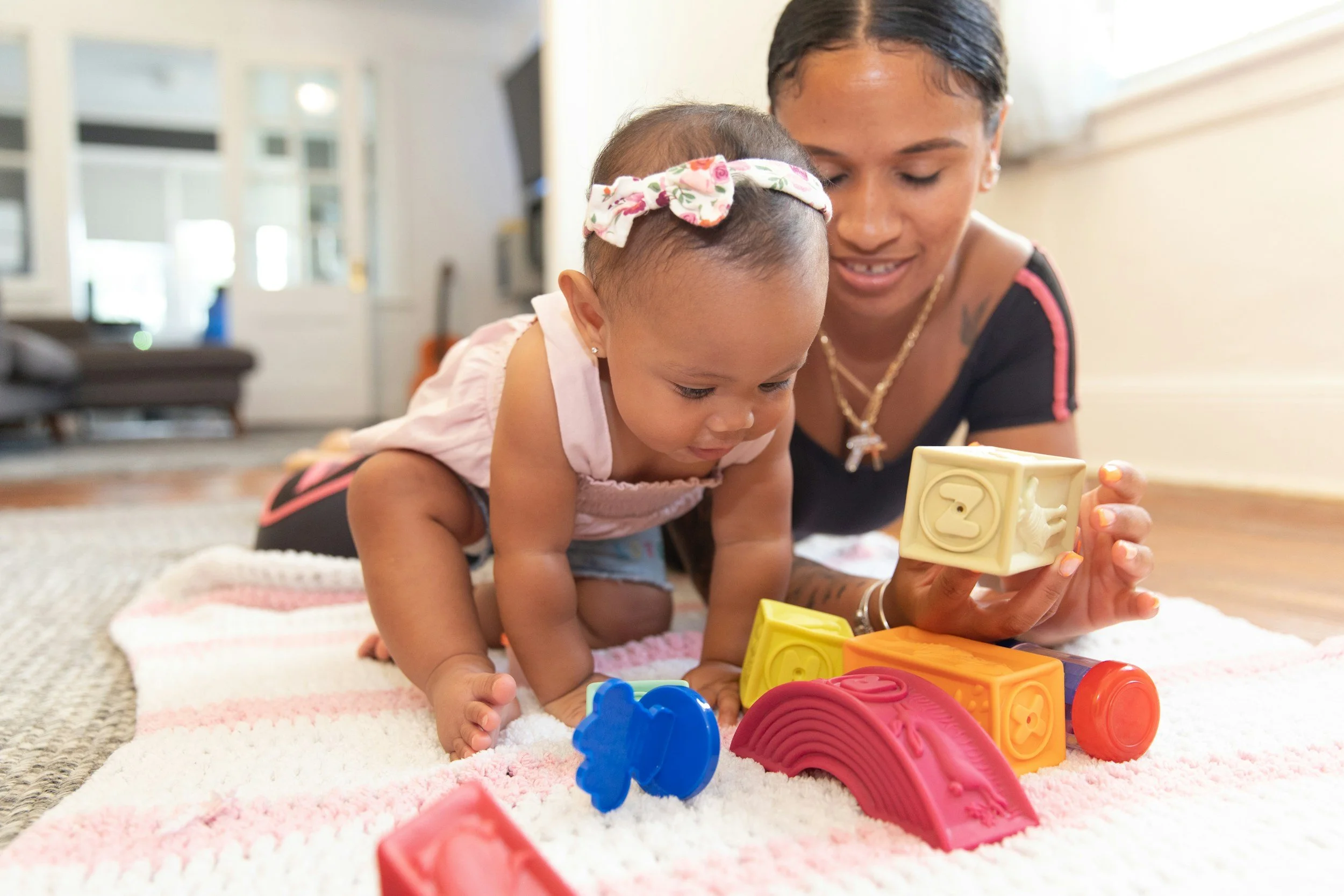
First, tummy time, early and often, in short awake-and-happy bursts that add up across the day. It is the best-evidenced thing on this list and it builds the head control and core strength every later milestone sits on. Second, floor time over container time. Babies wire up movement by moving, so less time in the bouncer, swing, and propped seat, and more time free on a blanket to reach, push, and wriggle. Third, the basics that steady any nervous system: protected, consistent sleep, good hydration for the nursing parent, and getting outside together for daily movement and daylight, both of which help an immature nervous system find its rhythm. Sonoma County is built for the last one.
The bottom line
A baby who is slow to roll, sit, or crawl is usually not a baby who is behind. Far more often it is a nervous system taking its own honest path through a wide normal range, sometimes working against a little static on the line. We look at the nervous system, we read it with state-of-the-art scans instead of guessing, we clear the interference with the gentlest possible input, and we re-check to confirm it changed. The goal is a baby whose brain and body can talk cleanly, so movement comes online the way it was designed to.
Your baby is built to work at 100 percent. Sometimes the job is just clearing the static so the map can finish drawing itself.
Strong. Clear. Unshakable. That is what we want for your family, starting with your youngest member.
Titan Chiropractic, 1476 Professional Dr, Petaluma, CA 94954. Neurologically focused prenatal, pediatric, and family chiropractic for Petaluma, Penngrove, Cotati, and Sonoma County. We don’t guess. We test, adjust, and retest.
Ready to Start Your Healing Journey?
Our Titan Chiropractic family is here to support you and your loved ones with compassionate, nervous system-based care.
Book Your First Visit